We are an interdisciplinary group that studies the foundations of progress in computing: what are the most important trends, how do they underpin economic prosperity, and how can we harness them to sustain and promote productivity growth.

Latest news & insights

Featured Research

September 2026
AI in Science: Early Insights
Mihai Codreanu, Alex Imas, Juan Mateos-Garcia, Joseph Emmens, Evalyne Muiruri, Arthur Turrell, Julian Jacobs, Atoosa Kasirzadeh, Ana Trišović, Yiyuan Chen, Tanya Rodchenko, Catherine Pollard, Scott Strand, Daniel Rock, Zanna Iscenko, Fabien Curto Millet, Neil Thompson, James Manyika

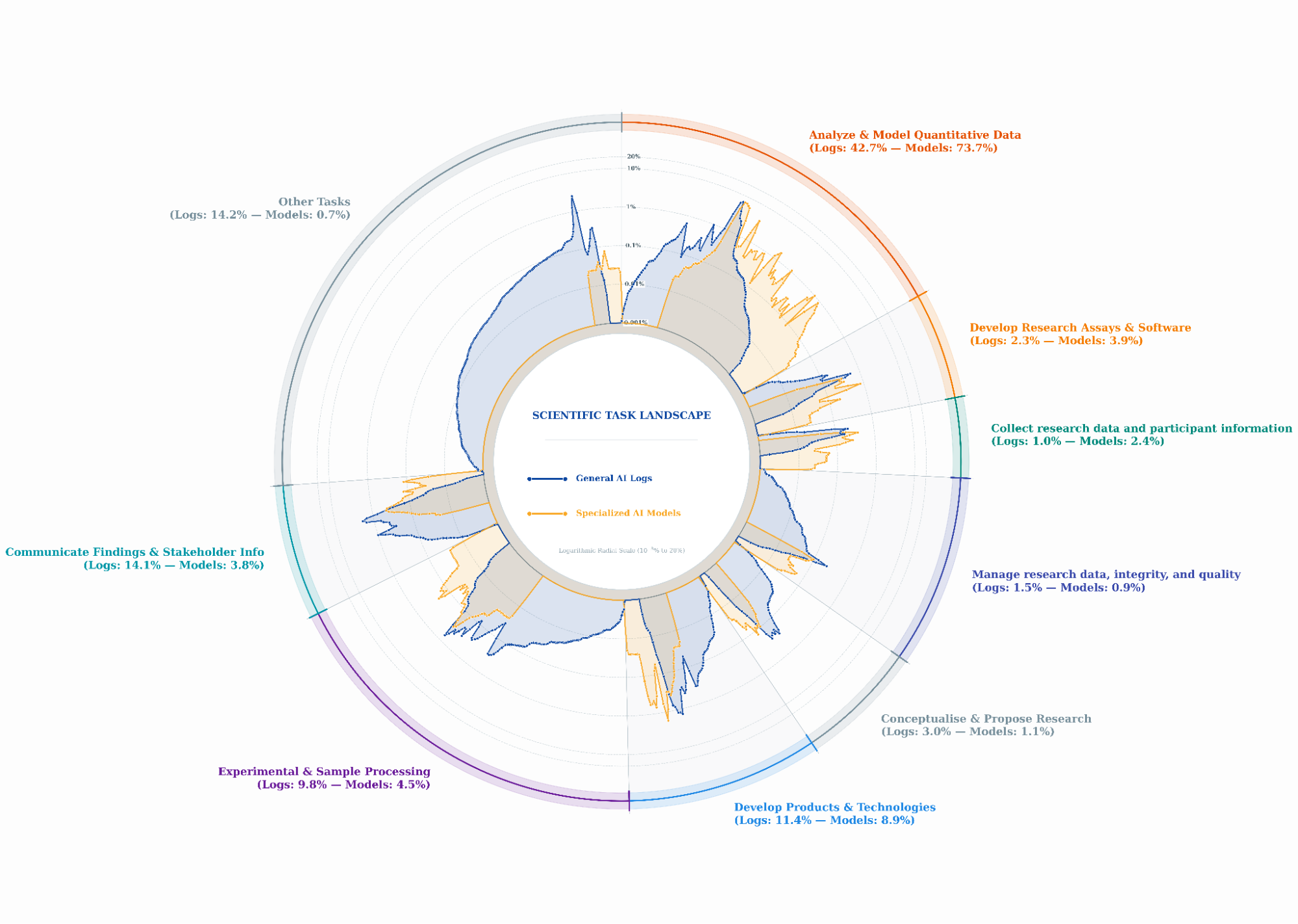
Scientific progress is a key driver of economic growth and prosperity. There is great excitement - but also concerns - about the impacts of AI on science, but so far little data. We provide early insights on this from three data sources: a sample of 15 million Gemini interactions, an inventory of over 2,600 specialized AI models across disciplines, and a survey of over 600 scientists. We map these data to a new taxonomy of scientific tasks to study how scientists are using AI. Four main findings emerge. First, we find broad adoption and coverage: scientists use AI more than most other occupations. Specialized AI models have broad disciplinary coverage and are highly cited. Nearly half of the scientists surveyed report using some form of AI every day. Second, we document evidence that LLMs (proxied through Gemini usage) and specialized models act as complements–LLMs are used for general analysis, coding, and manuscript preparation, while specialized models provide domain-specific predictions, data generation and classification. Third, scientists report large productivity gains from using AI: a saving of nearly 7 hours per week, time which is primarily re-invested in more research. Finally, we show that AI is already changing the scientific process. As some stages of scientific research become easier, bottlenecks shift downstream. Scientists report an increased backlog of untested hypotheses and substantial demand for output verification. Our findings suggest that AI holds significant potential to increase scientific productivity. However, as with other sectors, its ultimate impact will be governed by complex task interdependencies and investment into the elimination of emerging bottlenecks.

June 2025
Expertise
David Autor & Neil Thompson

When job tasks are automated, does this augment or diminish the value of labor in the tasks that remain? We argue the answer depends on whether removing tasks raises or reduces the expertise required for remaining non-automated tasks. Since the same task may be relatively expert in one occupation and inexpert in another, automation can simultaneously replace experts in some occupations while augmenting expertise in others. We propose a conceptual model of occupational task bundling that predicts that changing occupational expertise requirements have countervailing wage and employment effects: automation that decreases expertise requirements reduces wages but permits the entry of less expert workers; automation that raises requirements raises wages but reduces the set of qualified workers. We develop a novel, content-agnostic method for measuring job task expertise, and we use it to quantify changes in occupational expertise demands over four decades attributable to job task removal and addition. We document that automation has raised wages and reduced employment in occupations where it eliminated inexpert tasks, but lowered wages and increased employment in occupations where it eliminated expert tasks. These effects are distinct from—and in the case of employment, opposite to—the effects of changing task quantities. The expertise framework resolves the puzzle of why routine task automation has lowered employment but often raised wages in routine task-intensive occupations. It provides a general tool for analyzing how task automation and new task creation reshape the scarcity value of human expertise within and across occupations.

August 2024
The AI Risk Repository: A Comprehensive Meta-Review, Database, and Taxonomy of Risks From Artificial Intelligence
Peter Slattery, Alexander K. Saeri, Emily A. C. Grundy, Jess Graham, Michael Noetel, Risto Uuk, James Dao, Soroush Pour, Stephen Casper, Neil Thompson

The risks posed by Artificial Intelligence (AI) are of considerable concern to academics, auditors, policymakers, AI companies, and the public. However, a lack of shared understanding of AI risks can impede our ability to comprehensively discuss, research, and react to them. This paper addresses this gap by creating an AI Risk Repository to serve as a common frame of reference. This comprises a living database of 777 risks extracted from 43 taxonomies, which can be filtered based on two overarching taxonomies and easily accessed, modified, and updated via our website and online spreadsheets. We construct our Repository with a systematic review of taxonomies and other structured classifications of AI risk followed by an expert consultation. We develop our taxonomies of AI risk using a best-fit framework synthesis. Our high-level Causal Taxonomy of AI Risks classifies each risk by its causal factors (1) Entity: Human, AI; (2) Intentionality: Intentional, Unintentional; and (3) Timing: Pre-deployment; Post-deployment. Our mid-level Domain Taxonomy of AI Risks classifies risks into seven AI risk domains: (1) Discrimination & toxicity, (2) Privacy & security, (3) Misinformation, (4) Malicious actors & misuse, (5) Human-computer interaction, (6) Socioeconomic & environmental, and (7) AI system safety, failures, & limitations. These are further divided into 23 subdomains. The AI Risk Repository is, to our knowledge, the first attempt to rigorously curate, analyze, and extract AI risk frameworks into a publicly accessible, comprehensive, extensible, and categorized risk database. This creates a foundation for a more coordinated, coherent, and complete approach to defining, auditing, and managing the risks posed by AI systems.