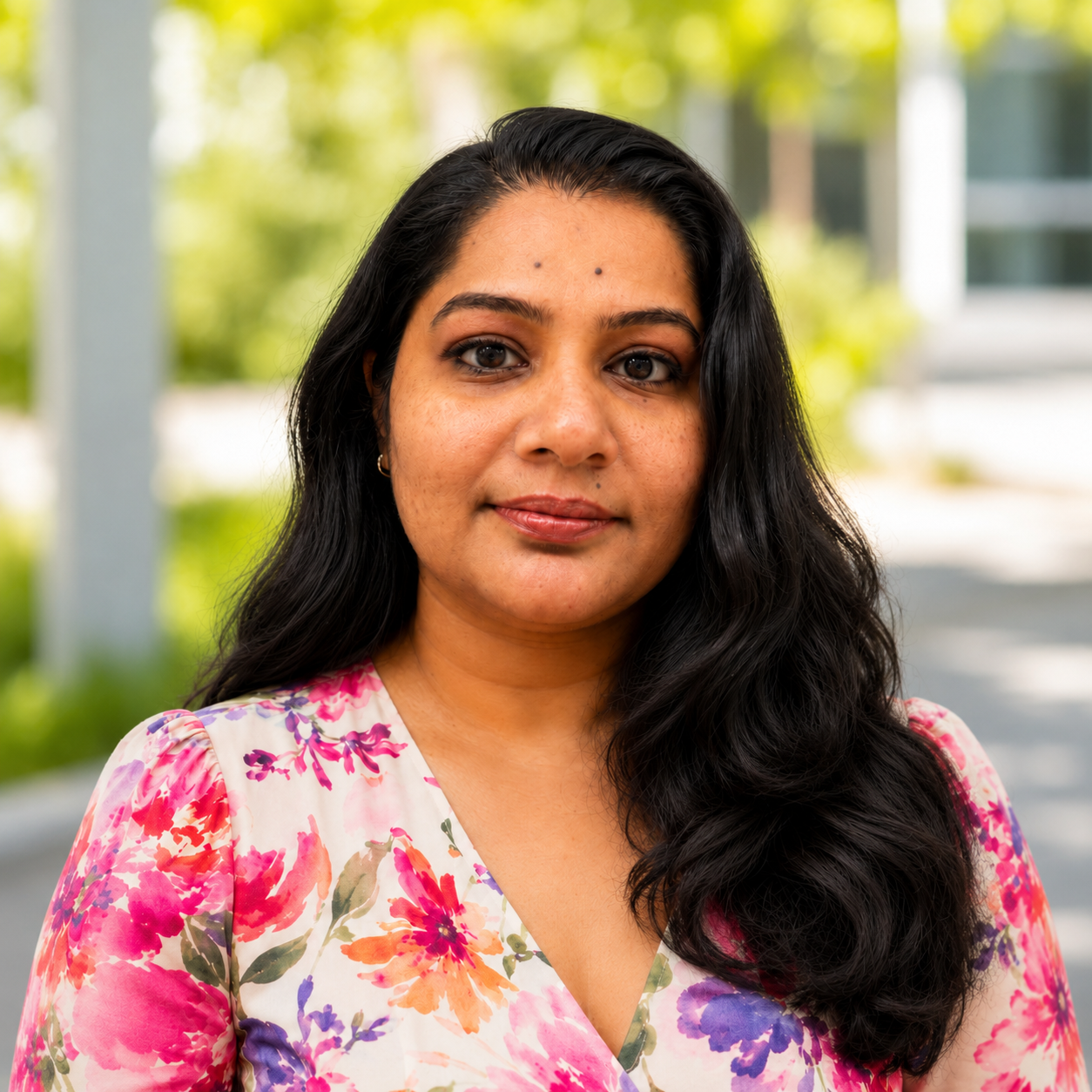
Laura Veldkamp
Columbia University
Economist
Laura Veldkamp is the Leon G. Cooperman Professor of Finance & Economics at Columbia University's Graduate School of Business, with an economics Ph.D. from Stanford. She has been a board member and chair of the governance committee for the American Finance Association, an editor of the Journal of Economic Theory and a frequent keynote speaker at prestigious academic conferences in both finance and economics. Currently, Professor Veldkamp serves on the American Economic Association’s awards committee and co-chaired the program committee for the annual conference of the Society for Financial Studies. Her accomplishments have earned her recognition as a fellow of the Econometric Society, the Society for the Advancement of Economic Theory, the Finance Theory Group, the National Bureau of Economic Research and the Centre for Economic and Policy Research. In the public sphere, she has advised the New York Federal Reserve and the Bank of International Settlements. Professor Veldkamp’s research examines how investors’ or firms’ use of data and AI affect consumers, the macroeconomy, markups, economic measurement and financial valuations. She is an author of two textbooks: Information Choice in Macroeconomics and Finance, and The Data Economy: Tools and Applications, both with Princeton University Press.
Raj Chetty
Harvard University
Economist
Raj Chetty is the William A. Ackman Professor of Economics at Harvard University and the Director of Opportunity Insights, which uses big data to study the science of economic opportunity: how we can give children from all backgrounds better chances of succeeding? Chetty’s work has been widely cited in academia, media outlets, and policy discussions in the United States and beyond.
Chetty received his Ph.D. from Harvard University in 2003 and is one of the youngest tenured professors in Harvard’s history. He has received numerous awards for his research, including a MacArthur “Genius” Fellowship, the John Bates Clark medal, given to the economist under 40 whose work is judged to have made the most significant contribution to the field, and Harvard’s George Ledlie prize, awarded for research that made the most valuable contribution to science, or in any way for the benefit of mankind.
Ben Zweig
Revelio Labs
Entrepreneur
Ben Zweig is a labor economist and the CEO of Revelio Labs, a workforce intelligence company. A passionate advocate for understanding the evolving nature of work, Ben also teaches The Future of Work at NYU Stern. Before founding Revelio Labs, he was a Managing Data Scientist at IBM’s Chief Analytics Office and a Quantitative Strategist at an emerging markets hedge fund. He holds a PhD in Economics from the CUNY Graduate Center, where his research explored Occupational Transformation and Social Mobility. Ben is the author of Job Architecture: Building a Language for Workforce Intelligence and the host of the popular podcast, The Economics of Work.
Neil Thompson
MIT FutureTech
Researcher / Director
Dr. Neil Thompson is the Director of the FutureTech research group, and Principle Research Scientist at MIT’s Computer Science and Artificial Intelligence Lab (CSAIL), and at MIT’s Initiative on the Digital Economy (IDE) within the Sloan School of Management. Guided by Dr. Thompson’s leadership, the FutureTech group researches the cutting edge and most important trends driving progress in computing and AI, how these trends underpin scientific progress and economic prosperity, and produces rigorous insights that broaden humanity’s knowledge, and inform policy and industry decisions. Since founding MIT FutureTech in 2019, Dr. Thompson’s research group has attracted over $25M in funding, and has grown to be one of the largest research groups at MIT with over 110 researchers. Dr. Thompson maintains research partnerships with leading organizations such as Google, IBM, Amazon, Accenture, Microsoft, Los Alamos National Labs, and others.
Betsey Stevenson
University of Michigan
Professor of Public Policy
Betsey Stevenson is a professor of public policy and economics at the University of Michigan’s Gerald R. Ford School of Public Policy, with expertise in labor economics and public policy. A former member of the White House Council of Economic Advisers and former Chief Economist at the U.S. Department of Labor, her research explores the impact of public policy on labor markets, families, and economic well-being.
Jason Pruet
OpenAI
Physicist & Technology Leader
Jason Pruet earned his Ph.D. in Physics from the University of California, San Diego, where his research on gamma-ray bursts explored the astrophysical conditions for heavy-element formation. At Lawrence Livermore National Laboratory, he led computational nuclear physics efforts supporting stockpile stewardship, nuclear detection, and forensics. Later, in Washington, D.C., Jason directed programs within the National Nuclear Security Administration and led the Office of Engineering and Stockpile Assessments. While in D.C. Jason also served as chief of an intelligence branch examining foreign nuclear weapons programs. Following a decade of public service, Jason joined Los Alamos National Laboratory, where he directed the Advanced Simulation and Computing (ASC) program and co-founded the National Security AI Office to use. Today, at OpenAI, Jason works with researchers, policymakers, and mission-driven organizations to advance AI for the benefit of humanity.
Diane P. Staheli
MIT Lincoln Laboratory
Senior Staff
Diane P. Staheli is a senior staff member in the Cyber Security & Information Sciences Division at MIT Lincoln Laboratory, where she leads efforts in human-centered AI. Her work focuses on human-AI interaction, explainable AI, decision science, autonomy, and user-centered design, drawing on research across cybersecurity, intelligence, influence operations, and serious gaming.
Benjamin F. Jones
Northwestern University
Professor of Entrepreneurship and Professor of Strategy at Kellogg
Ben Jones is the Gordon and Llura Gund Family Professor of Entrepreneurship and Professor of Strategy at Northwestern University’s Kellogg School of Management, where he co-directs the Ryan Institute on Complexity. An economist by training, his research examines economic growth, innovation, entrepreneurship, and scientific progress; he previously served as Senior Economist for Macroeconomics at the White House Council of Economic Advisers.
John N.T. “Jack” Shanahan
Lieutenant General
United States Air Force
Lieutenant General John (Jack) N.T. Shanahan, United States Air Force, Retired, concluded a distinguished 36-year military career in 2020. In his final role, he served as the inaugural Director of the U.S. Department of Defense Joint Artificial Intelligence Center, where he led efforts to integrate AI across the defense enterprise. Over his career, Jack held a variety of operational and staff positions spanning flying operations, intelligence, policy, and command and control. He commanded at the squadron, group, wing, Agency, and Numbered Air Force levels. As the founding Director of the Algorithmic Warfare Cross-Functional Team (Project Maven), he pioneered the DoD’s first operational AI program, advancing the use of AI for military operations and intelligence collection and analysis.






_crop.jpg)
.jpg)